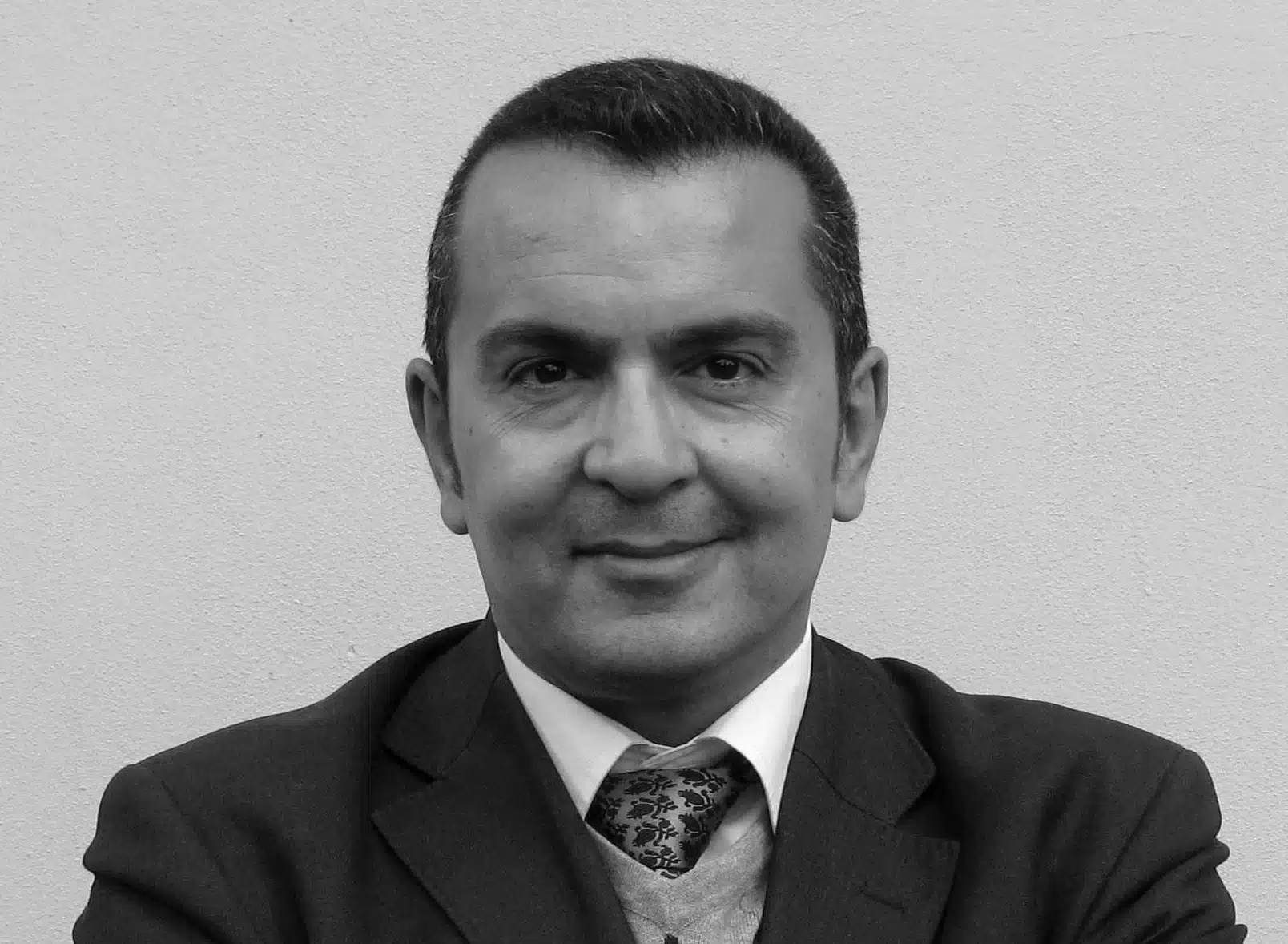
Aliko Songolo
Research project
Migration of African-American Writers to Paris and Encounter with African and Caribbean Writers (1930-1960)
Project summary
The project aims to explore the complex and sometimes complicated web of relationships among African-American writers, artists, and intellectuals and their Francophone African and Caribbean counterparts over three crucial decades of the twentieth century.
African-American interest in Africa was not new. It dated back to the 18th century and found its political culmination with the creation of Liberia in 1847 by freed American slaves. It was an African-American missionary, William Henry Sheppard who, in 1907, revealed to the world the atrocities committed in the Congo by King Leopold II of Belgium and multinational companies of the time, leading to the first recognition of the offense of “crime against humanity.” Two additional examples include the return-to-Africa movements such as Marcus Garvey’s Universal Negro Improvement Association, and the Pan-African Congress, the first meeting of which was held in Paris in 1919, co-organized by African-American scholar and activist W.E.B. Du Bois, with the singular purpose of militating for the end of colonialism on the African continent.
The period under scrutiny in this project is noteworthy because of its roundabout connection of African-Americans to Africa and because this connection happened on French soil. In the 1920s and 1930s African-American writers of the Harlem Renaissance movement migrated to France to seek relative freedom of expression, away from racial discrimination and the deleterious social and political pressures in the United States. In Paris, they found what they sought, but in addition they encountered writers and other intellectuals from Africa and the French West Indies. The bond that developed between the three groups was highly productive in terms of mutual influences and cross-pollination in the areas of literature, culture, and political awareness. The encounter with the African elite brought African-Americans face to face with an Africa they had not heard of in their country. At the same time, the Africans learned much about an American political and social reality they knew only vaguely. The difficulty of cross-communication between the three groups was mitigated by the creation of La Revue du Monde noir by the Nardal sisters from Martinique. Thus, Americans could read the work of Francophone African and Caribbean writers in translation, and vice-versa. The renowned Martinican poet Aimé Césaire averred that he had never heard the black world described in such stark terms as Harlem was in the poetry of Langston Hughes and Claude McKay. He subsequently wrote a Master’s thesis on « Le thème du Sud dans la littérature Négro-Américaine. » For his part, Léopold Sédar Senghor, the acknowledged theorist of Négritude, contended many years later that the “real father” of the Négritude movement was the African-American W.E.B. Du Bois.
The decade of the 1940s and 1950s intensified contacts between the three groups. The creation in 1947 of the bilingual journal Présence Africaine and the eponymous publishing house by Alioune and Christiane Diop assembled African and African-American as well as French leftist intellectuals. In 1956 and 1959 the group organized the “Congrès des écrivains et artistes noirs” in Paris and Rome, at which such figures as Frantz Fanon, Senghor, Césaire and others distinguished themselves with their eloquence in the pursuit of independence for African countries that would foreground culture. As he observed the 1956 congress, the African-American writer James Baldwin wrote his famous essay, “Princes and Powers” that revealed at once the enduring search for the “real Africa” and profound misunderstandings between African-American and African intellectuals in the political realm.
The decade of the 1950s ended with intensive struggles for independence in Africa and the beginning of the civil rights struggle in the United States. Despite fewer direct contacts and lesser literary production in the years immediately following African independence, a relatively recent but significant phenomenon has emerged in Francophone African literature: The legacy of African-American novelist Chester Himes. A contemporary of protest writers such as Richard Wright and James Baldwin, Himes was never much appreciated in the United States until he moved to France in the late 1950s and became famous for his crime novels that were immediately translated into French for “La Série noire.” Set in Harlem, Himes’ novels later circulated among a new generation of African writers and provided a model for novelists from the latter Mongo Beti to Sony Labou Tansi and more recently for Leonora Miano, Alain Mabanckou and Fiston Mwanza Mujila.
In sum, the project will aim to focus on a range of contributions of African-American thought and style of writing to the development of Francophone African writing and political thought over a period of three decades. Conversely, it will also display a new kind of knowledge of the African continent that African-American writers gained through their interaction with the African elite of their time.
Serving as a Fulbright Specialist will afford me an opportunity to link or relink three universities on three continents. These universities have enjoyed variously shared histories over several decades. The University of Wisconsin (UW) has had a highly successful exchange program with Aix-Marseille Université (AMU) for over 50 years; UW and Université Gaston Berger (UGB) of Saint-Louis, Senegal, enjoyed a rich exchange program from 1992 to 2012 that was initially supported by the US State Department. Reviving this link and connecting UGB to AMU would be of great intellectual and educational benefit to all three universities. Given adequate resources, UGB colleagues would find their way back to UW to pursue their research on African-American literature and other issues of interest; they will also benefit from abundant resources of UW libraries and researchers in Departments of African Cultural Studies, Afro-American Studies and in the African Diaspora & the Atlantic World Research Circle. Those who study these issues in French will share their research with colleagues and students in the UW’s Department of French & Italian and at AMU’s Institute for Advanced Studies (Iméra) in Marseille. Finally, it will be a great opportunity for capacity building in Afro-American studies for UGB’s English Department and a good opportunity for AMU’s Iméra to further diversify its humanities programming within its vibrant array of interdisciplinary collaborations anchored in the sciences and social sciences.
Other residencies at IMéRA
IMéRA, May 8-20, 2020; Saint-Louis du Sénégal, May 20-June 10; IMéRA, June 11-16, 2020 – Fulbright Specialist Chair USA/Africa/France — Resident
Migration of African-American Writers to Paris and Encounter with African and Caribbean Writers (1920-1960)
The project pursues three objectives: the first is scientific, the second is institutional and the third has to do with our interdisciplinary doctoral courses supply.
The first mission as Fulbright Specialist in 2018 conducted by Prof Songolo did allow to make a substantial progress on the three tracks (see his report on his first mission to the Commission). The second mission is designed to deepen cooperation in particular from the research and institutional perspectives.
A first activity, like the last time around, will be instructional.But while the seminar and lectures were of a general nature, geared toward the collective migration of African-American writers and their encounter with African and Caribbean elites, this time Prof Songolo will pair an African-American writer and an African writer/filmmaker whose works feature the downtrodden Black diaspora in the city of Marseille. McKay’s celebrated novel Banjo (1929) depicts the miserable life of the dock workers from the U.S., French Caribbean, and Africa who attempt to eke out a living in the port city. Similarly, Ousmane Sembène’s Le Docker noir (1956) depicts African laborers from different countries, but mostly Senegal, who live in Marseille doing menial jobs. The resemblance of the biographies of the two writers is quite remarkable, and so are the lives of the characters in the two novels. The novels will make it possible, also, to explore the history of jazz in Marseille. The jazz age came to France quite early, in 1917 by most accounts, and was already quite popular in Marseille beginning in the 1920s. The main character in McKay’s book, the eponymous Banjo, aspires to make a decent living playing jazz, but mostly, to establish a Black identity through it. Even though several critics have claimed that Le Docker noir was influenced by Banjo, there is not much evidence to support this position. What seems important to study is the two ways in which the two novels approach the questions of black identity, migration, poverty, injustice, and their divergent representations of the city of Marseilles.
As a second activity, Aliko Songolo proposes to spend 2-3 days at the archives of the Centre de recherche et de documentation du Sénégal (CRDS) taking an inventory of materials that may need digitizing.CRDS consists of a library, a museum, a reading room, an instructional space, and a collection of important archives, some dating back to the arrival of the Portuguese in the 15th century and extending through the French colonial period to the present time. During my last visit, he was informed that some of the oldest archives are on fragile paper and need to be digitized. He is indeed confident that the UW Africanist librarian will propose a digitization scheme to the Collaborative Africana Materials Project (CAMP), a national Title VI program run by Africanist librarians which “promotes collaborative approaches to collection, preservation, and access to rare, expensive, or fragile primary and secondary source material from Africa.” UW-Madison is well-equipped in this area, has previous experience with this type of project, and has one of the top African Studies Programs in the US.
Last but not least, since the last 2017-2018 mission, Iméra is in the process of launching together with the AUF (Agency of French-speaking Universities) a Chair titled “Structural transformations and institutional dynamics in Africa” that is designed to bring together scholars from social sciences and the humanities (but not only, artists and hard scientists may be also involved) around a specific research issue related notably to the African continent. This chair will be operational from September 2019. As currently conceived, the contributions of Prof Songolo’s mission to this chair are expected to go beyond the topics of the first mission.In particular, a few new research lines are suggested : (a) the study of forced or voluntary migrations of peoples of African descent worldwide, including intra-continental displacements. This axis will focus on the movement and exchange of the arts, ideas, cultures and peoples by deploying interdisciplinary approaches derived from the social sciences and the humanities; (b) the second axis will seek to understand the ecology of poverty, one of the grimmest scourges of migration. What maintains poverty within the multiplicity of physical, social, and political environments of these populations and what motivates and perpetuates their modes of existence? What are the best ways to explore and recommend pathways for escaping the cycle of poverty in which millions are entrapped? This axis of research will require the collaboration of disciplines such as epidemiology, environmental studies, demography and other hard sciences. Despite the apparent demarcation of the two axes, the team of five scholars to be assembled from Marseilles, Madison and St. Louis will spend two to three weeks in residence in Marseilles in mid-May or mid-June 2020. The team will present a multi-voiced seminar at the beginning of the research residence delineating the issues at hand, and at the end presenting its findings to the resident fellows of the institute and to the public. One of the main activities during this second mission will then be to refine the themes for the research residency in collaboration with the participants at Marseille and St. Louis.