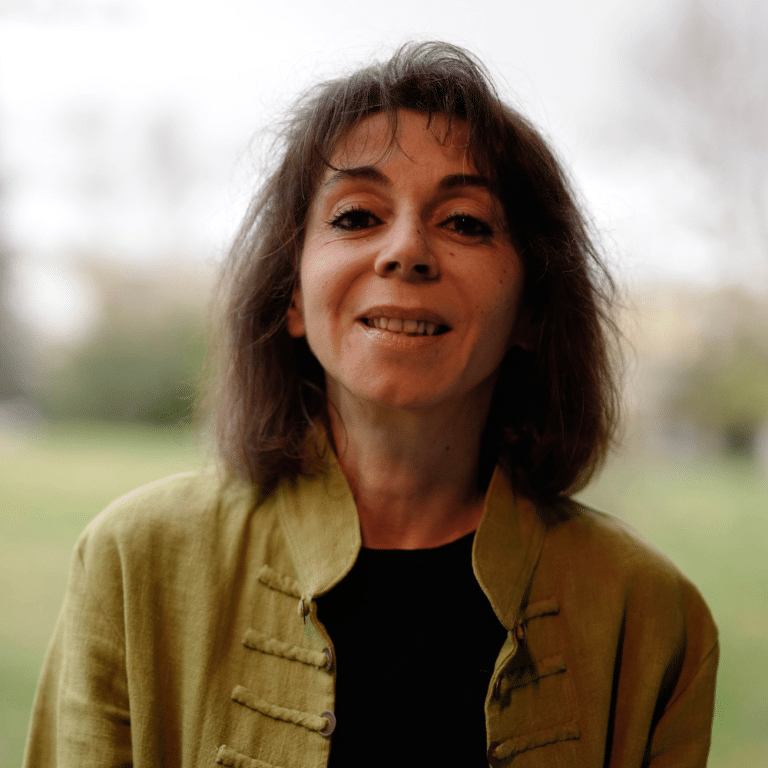
Marlène Monnet Dupuy
Research project
The rhythms of work, the rhythms of the body: towards sensitive and sustainable management through dance
Project summary
How can organisations reconcile economic performance, environmental requirements and social responsibilities? What becomes of these ambitions when they are translated into day-to-day practices? These questions lie at the heart of my research into logistics and supply chain management, which focuses on the sometimes unexpected consequences of sustainability initiatives within supply chains (Carter, Kaufmann and Ketchen, 2020).
Far from eliminating organisational tensions, sustainability initiatives can give rise to new ones, as demonstrated by research into last-mile logistics, collaborative platforms and recycling chains: balancing logistical efficiency with the reduction of environmental impacts, creating social value whilst ensuring economic viability, or meeting the divergent expectations of different stakeholders (Monnet Dupuy and Moncef, 2021; Moncef and Monnet Dupuy, 2021).
Today, these tensions are evolving as digital transformation accelerates, artificial intelligence develops and demands for social responsibility grow. Organisations are expected to be more efficient, more innovative, more responsible and more attentive to working conditions. Taken separately, these objectives are legitimate; pursued simultaneously, however, they become difficult to reconcile: this is what the management science literature refers to as paradoxes (Poole and Van de Ven, 1989), in particular sustainability paradoxes when they concern the reconciliation of organisations’ economic, environmental and social challenges (Smith and Lewis, 2011; Van der Byl and Slawinski, 2015; Hahn et al., 2015).
These paradoxes are not merely a matter of strategic trade-offs; they manifest themselves in the ways in which actors act, cooperate and reconcile sometimes conflicting objectives (Gherardi, 2009; Smith and Lewis, 2011). They are also reflected in the lived experience of work, through the rhythms of activity, forms of coordination, interactions and the constant adjustments that accompany organisational change (Ancona, Okhuysen and Perlow, 2001; Orlikowski and Yates, 2002). Research on organisational temporalities shows that organisational changes are accompanied by shifts in work rhythms.
Shifting the focus to the paradoxes of sustainability
The project being developed at Iméra is based on the assumption that gaining a better understanding of these paradoxes requires a shift in perspective: the subject of the research remains the same, but the ways in which it is explored are being renewed. Traditional management science methods enable the analysis of strategies, organisations and discourses; they do not directly address the way in which these tensions are embodied in everyday practices. It is this area that the project aims to investigate, by fostering a dialogue between management science and dance.
Dance as a research method
Here, dance is viewed as a complementary methodological tool for research. The aim is not to employ an artistic approach in the service of research, but to regard the body and movement as means of exploring the paradoxes of sustainability within organisations in a different way. The aim is to create an exploratory setting in which the body becomes a gateway to the sensory dimensions of work, which are partly beyond the reach of conventional forms of verbalisation.
This approach forms part of the arts-based research movement ( Barone and Eisner, 2012; Leavy, 2020) and draws inspiration from the work of Chandler (2012), who views dance as a method of research and knowledge production. Movement, rhythm, synchronisation and desynchronisation thus become entry points for understanding how changes in the world of work manifest themselves through the practices of those involved, from a perspective that is attentive to the sensory dimensions of organisational experience (Strati, 1999; 2007).
This approach is in line with research on sense-making ( Weick, 1995), inviting participants to construct meaning around their relationship to work based on what the movement brings to light. It also draws on the work of Satama, Blomberg and Warren (2022), which shows that the physical dimensions of dance can shed light on processes of collective creativity, cooperation and coordination by revealing forms of interaction and adjustment that often remain implicit within organisations.
A research-creation project throughout the residency
The residency provides an ideal setting for developing this approach, which lies at the intersection of management sciences, the arts and research-creation – understood as a means of generating knowledge through the creative process (Gosselin and Le Coguiec, 2006). This research will draw on several companies committed to corporate social responsibility initiatives and will utilise a range of methods: field observations, interviews with employees, managers and human resources managers, as well as workshops combining dance, music and discussion sessions.
These workshops will be designed as frameworks intended to bring out alternative forms of expression, verbalisation and reflection on working practices and situations. Stories, observations, written or visual works, and records of the creative process will be analysed collectively to gain a better understanding of how the paradoxes of sustainability are experienced and incorporated into work situations.
In addition to the expected scientific publications, the project may lead to a choreographic work inspired by the material gathered during the research. It thus invites us to shift our perspective by posing the following question: what do the body’s paradoxes of sustainability reveal that more conventional discourses, indicators and research methods still struggle to grasp?
Biography
Marlène Monnet Dupuy is a senior lecturer (maître de conférences) in management sciences at Aix Marseille Université, within the Centre de Recherche sur le Transport et la Logistique (CRET-LOG). She holds a doctorate in management sciences and a PhD from the Norwegian School of Management, and her research focuses on sustainable development in logistics and supply chain management. Her work centres on reverse logistics, urban logistics and the paradoxes of sustainability. Drawing on a variety of case studies — logistics service providers, waste electrical and electronic equipment, and anti-waste platforms — she examines the tensions between economic, environmental and social challenges within organisations and in the practices of stakeholders.
His work has been published in journals such as the International Journal of Physical Distribution & Logistics Management, the Revue française de gestion, and Logistique & Management.