Crédit photo : RGxHB Production
Kamran Matin
Research project
Inter-Subaltern Colonialism: Mapping Non-Western Colonialism onto Postcolonial Theory
Project summary
Postcolonial theory (hereafter Postcolonialism) is largely silent on non-Western forms of colonialism. But why? And how can we break this silence? This project provides an interdisciplinary framework for analysing the colonial oppression of non-Western peoples by non-Western states. Colonial practices have long marked nation-building processes across the world. However, non-Western colonialism has become more prominent today in the context of Western decline and Asia’s rise. From Turkey, Iran, and Russia to India, China, and Myanmar, non-Western states are engaged in colonial practices against non-Western peoples. Yet Postcolonialism, the burgeoning academic field arguably best suited to studying non-Western colonialism, tends to elide them. This project turns Postcolonialism back on itself to pinpoint the intellectual roots of this elision. It locates them in Postcolonialism’s reproduction of the disciplinary division between social theory and international theory, and it offers a remedy. It combines theoretical insights from ‘uneven and combined development’, International Relations (IR), Postcolonialism, and nationalism studies with the empirical rigour of Area Studies and indigenous and autoethnographic sensibilities to develop a new concept: ‘inter-subaltern colonialism’.
Turning Postcolonialism back on itself
Postcolonialism is the dedicated field for the study of colonialism. Yet it neglects non-Western colonialism. The intellectual and political implications of this paradox have grown in tandem with Postcolonialism’s increasing influence within and beyond academia. This proposal traces this paradox to Postcolonialism’s reproduction of the disciplinary division between international theory and social theory and offers an interdisciplinary solution through the development of the concept of ‘inter-subaltern colonialism’.
The concept is illustrated and refined through a case study of the Iranian variety of ‘the Kurdish question’, i.e., the interstate containment of Kurdish aspirations for self-rule. Iran’s historical experience as a semi-colony, its contemporary resistance to Western imperialism, and its rhetoric of ethnic inclusivity make a strong test case for the proposal’s core hypothesis—namely, that the intersection of uneven capitalist development and geopolitical hierarchy orientates non-Western states towards nation-building around a particular culture. Consequently, ‘other’(-ised) peoples are minoritised, securitised, and subjected to colonial assimilation. The interdisciplinary, engaged, and critical nature of this enquiry, together with the multiple theories and methodologies it deploys, means that it falls between the foci and mandates of existing funding calls.
Focusing on non-Western colonialism
Non-Western colonialism marked the long twentieth century, from Russian and Japanese colonialism in Asia to Iranian and Turkish colonialism in Kurdistan. Its international dynamics are inadequately captured by internalist concepts such as ‘internal colonialism’ (Gonzalez-Casanova 1965). Despite its theoretical and normative focus on colonialism, Postcolonialism tends to elide non-Western colonialism. Most critiques of Postcolonialism, and its intellectual sibling decolonial theory, fail to investigate this elision. Instead, they focus on Postcolonialism’s analytical overreach (Táíwò 2022), cultural essentialism (Dirlik 2003; Parry 2004), counterproductive anti-universalism (Chibber 2013), discursive tensions (Choi 2003), or ambiguous anti-Eurocentrism (Matin 2013).
The idea of ‘permanent minorities’ (Mamdani 2020) has highlighted postcolonial colonialism (Young 2001: 20). However, it falls short of a coherent account of the socio-historical structure and geopolitical dynamics of non-Western colonialism, especially in states with a semi-colonial history such as Iran, whose subjugation of the Kurds forms the proposal’s empirical referent. Mapping non-Western colonialism onto Postcolonialism therefore requires a deeper critique of Postcolonialism, especially regarding its narrow conception of colonialism as the West’s domination of ‘the rest’, its normative desire to convict ‘the West’ as the sole agent of colonialism (Hobson 2020: 19–30), and its rejection of general social theory. To conduct this deeper critique, the proposal develops an interdisciplinary approach that also challenges the theoretical internalism, economic reductionism, and functionalist arguments of modernist theories of nationalism.
Argument
This proposal explores two hypotheses. First, Postcolonialism’s silence on non-Western colonialism results from its reproduction of the disciplinary divide between social theory and international theory. This is reflected in Postcolonialism’s Eurocentric definition of colonialism (Choi 2003), its ‘Orientalism-in-reverse’ (Al-Azm 1981), and its categorical rejection of ‘the universal’ (Matin 2013). Area Studies helps to break this silence (Beşikçi 2004; Soleimani & Mohammadpour 2019), but its over-empiricism (Cheah 2008) prevents it from developing a general theory of non-Western colonialism. This project overcomes that problem by developing the concept of ‘inter-subaltern colonialism’ based on an interactive conception of capitalist development and intersocietal relations—a conception absent from Postcolonialism but central to uneven and combined development. Theorising inter-subaltern colonialism therefore involves internationalising ‘subalternity’ (Gramsci 1999: 52) and redefining ‘colonialism’ as ‘foreign domination’, in which ‘foreignness’ is understood as the interactive development of cultural exteriority and ‘domination’ connotes an internationally conditioned, non-hegemonic form of rule (Guha 1997).
My second hypothesis is that inter-subaltern colonialism emerges from state-led projects of nation-building undertaken in resistance to the geopolitical pressures of European capitalism but prior to the internal development of capitalism. This temporal unevenness leads to nation-building around a particular cultural identity rather than capitalism’s ‘abstract individual’ as the sociological content of modern sovereignty (Marx 1993: 163). Consequently, ‘other’(-ised) peoples are politically subordinated and culturally assimilated. The project therefore provides critical support for Postcolonialism in ‘provincializing Europe’ (Chakrabarty 2008). It also contributes to internationalising nationalism studies and decolonising Area Studies by deploying the historical experience of a non-Western people to make a fundamental theoretical intervention.
Biography
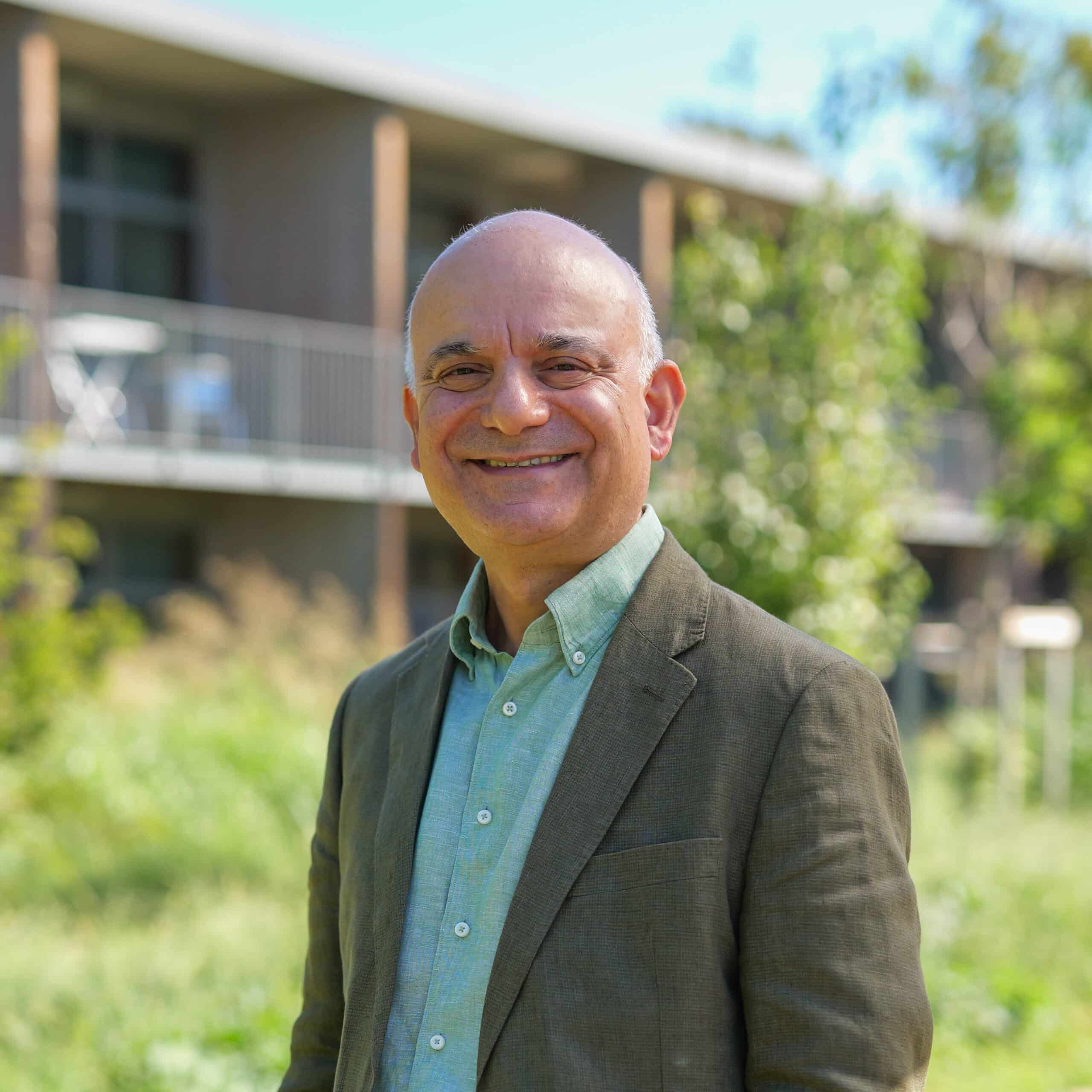
Kamran Matin is a Reader in International Relations at the University of Sussex, UK, specialising in historical sociology, international theory, nationalism, and politics and history of Iran and Kurdistan. His current research focuses on the theory of ‘uneven and combined development’ (UCD), nations and nationalism, and non-Western colonialism. He is the co-author of Queer Identities in Migration: Iranian Journeys (2026), the author of Recasting Iranian Modernity: International Relations and Social Change (2013), and the co-editor of Historical Sociology and World History: Uneven and Combined Development over the Longue Durée (2016). He has also published numerous articles, commentaries, and op-eds on Kurdish and Iranian politics.
He is a non-resident fellow at the Kurdish Peace Institute in Washington, DC, and a research associate at the German Institute for Global and Area Studies (GIGA) in Hamburg. He has served as director of Centre for Advanced International Theory (2022–24), steering committee member of Middle East and North Africa Centre at Sussex University (2016–2018), and convenor of the BISA Historical Sociology and International Relations Working Group (2014–2019).