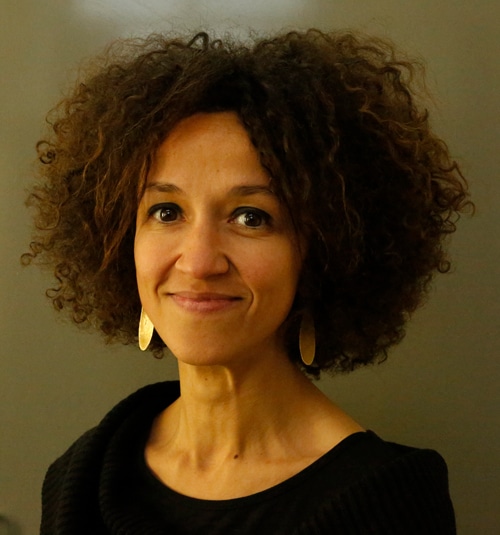
Judit Garzón Rodríguez
Research project
Echoes of the Nile. Reconstructing Object Biographies in the Musée d’Archéologie Méditerranéenne through Digital Methods
Project summary
Objects as Travellers of the Mediterranean
Across the Mediterranean, objects have constantly been in motion – carried across seas, exchanged between cultures, collected, reinterpreted, and recontextualised over time. Museums today bring many of these trajectories together in a single place, where artefacts from very different historical worlds are displayed side by side. Yet behind each object lies a far longer and more complex history than what is visible in the museum gallery.
What can ancient Egyptian objects tell us if we follow their journeys across time, space, and cultures?
The project Echoes of the Nile explores this question through a focused study of Egyptian artefacts in the Musée d’Archéologie Méditerranéenne in Marseille. Rather than treating museum objects as static remnants of the past, this research approaches them as travellers with long and complex biographies – objects that have moved, changed meaning, and been reinterpreted across thousands of years. Following these trajectories means paying attention not only to origin, but also to transformation. Objects can shift meaning as they pass through different hands, institutions, and historical contexts. An artefact might begin its existence in ancient Egypt as part of a ritual, a burial, or everyday practice, before entering very different networks of circulation, collection, and interpretation in later periods. Each stage adds new layers of meaning, while sometimes obscuring earlier ones.
At its core, the project brings together Egyptology, Museum Studies, and Digital Humanities to rethink how we tell stories about cultural heritage – shifting from isolated artefacts to interconnected histories.
Entangled Cultural Histories
The project is grounded in the idea of entangled Mediterranean histories, where objects are seen as part of broader contact zones shaped by movement, exchange, and encounter.
In this context, Marseille plays a key role. As a port city shaped by maritime movement, migration, and cultural exchange, it has long functioned as a node within wider Mediterranean networks. The Musée d’Archéologie Méditerranéenne reflects this history, bringing together objects whose trajectories span different regions and historical moments.
From their creation in ancient Egypt to their presence in a Mediterranean museum today, these artefacts have passed through multiple contexts of use, loss, recovery, collection, and display. Rather than following a single linear path, their histories are layered and fragmented.
The project is guided by a series of interrelated questions emerging from these trajectories, such as how objects change when they move between cultures, what their journeys reveal about the Mediterranean as a space of connection and exchange, and how museums like the one in Marseille contribute to shaping our understanding of these entangled histories. In this sense, Egyptian artefacts are explored within broader historical processes of mobility, collection, interpretation, and institutional framing in Europe.
Echoes of the Nile is about rethinking how we relate to ancient objects today. By following their biographies across the Mediterranean, the project reveals not only the histories of things, but also the histories of the people, places, and ideas they connect.
Following Object Biographies Through Digital Methods
The central concept behind the project is object biography: the idea that artefacts have life histories shaped by human interaction, movement, and interpretation.
To explore these biographies, the project uses digital approaches that connect information about objects – including material properties, origins, archaeological contexts, collectors, museum records, and exhibitions – into a structured network of knowledge. This makes it possible to see relationships between objects, people, places, and events that are otherwise difficult to detect.
One of the aims is to make these histories more accessible beyond academic research. The project therefore aims to develop a prototype digital interface that allows users to explore object biographies interactively. Through maps, timelines, and network visualisations, visitors can follow the trajectories of individual artefacts and discover how they connect different historical moments and geographical spaces. Instead of presenting objects as isolated catalogue entries, this approach highlights their relationships and transformations. It invites users to see cultural heritage as something dynamic – shaped by movement, encounter, and reinterpretation.
For the museum, this opens new possibilities for documentation and interpretation. For research, it offers innovative ways of studying material culture through digital methods. And for broader humanities debates, it demonstrates how digital tools can support more connected and transparent forms of storytelling.
Biography
Judit Garzón Rodríguez is an Egyptologist working at the intersection of archaeology, social and cultural history, cognitive approaches, and digital humanities. She completed her PhD in Egyptology at Johannes Gutenberg University Mainz in 2023. Her research focuses on the social and cultural dimensions of ancient Egypt, with particular attention to everyday religion, material culture, object biographies, and processes of meaning-making through objects, texts, and images.
She is especially interested in how identities, beliefs, and social practices are constructed and negotiated, as well as in the ways modern scholarly frameworks shape interpretations of ancient evidence.
She has conducted research and fieldwork in Egypt, Spain, and Greece, and has held research stays and academic positions across Europe, the Middle East, and East Asia. Until September 2026, she is Visiting Professor at Northeast Normal University (China) and scientific coordinator of the HERMES Data Competence Centre at the Leibniz Institute of European History in Mainz.
Judit Garzon Rodriguez holds a FIAS fellowship for 2026-2027.
The FIAS fellowship Programme is supported by the European Union’s Horizon 2020 research and innovation programme under the Marie Skłodowska-Curie grant agreement n°101217263.