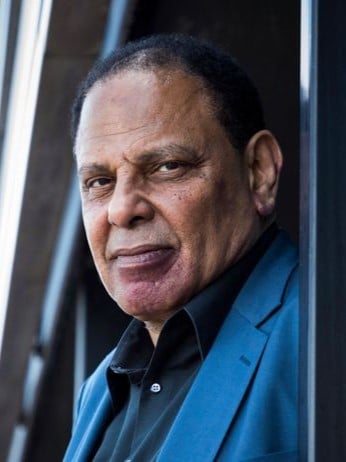
Carla Makhlouf Obermeyer
Research project
Challenges and shifts in public health in Arab countries: a critical synthesis of social science research
Project summary
As in other parts of the world, Arab countries are witnessing an increase in non-communicable diseases, due in part to behavioral factors related to diet and lifestyle. As these factors are rooted in particular social contexts, purely technical approaches are often insufficient for the prevention and treatment of these diseases, and there are sometimes discrepancies between the perspectives of clients and those of healthcare professionals. The project proposes to examine these discrepancies in behaviors that influence health, in knowledge and perceptions of health problems, and in exchanges between customers and professionals. This will be done through literature syntheses using mixed approaches from the health and social sciences. These syntheses will be prepared on specific themes relevant to the Arab world, to reveal discrepancies or convergences, identify the factors associated with them, and suggest ways of better targeting problems and improving services.
Other residencies at IMéRA
SENIOR FELLOW 2019-2021 — Senior Fellow
At the interface between Public Health and Medical Anthropology: Crossroads on key concepts
Senior Fellows are recruited on a project basis from among former Iméra residents for 3-year residencies*.
Medical anthropology and public health share questions about the factors that influence health, but the concepts underlying these common issues take on different meanings depending on the discipline, and can therefore give rise to both confrontations and fruitful exchanges.
The AnthroMed research group has initiated a project at the interface of the two disciplines, focusing on a series of key concepts. These concepts come from the social sciences and are used in public health to refer to the cultural dimension of health phenomena, but anthropologists sometimes find that they serve to oversimplify complex realities, while public health researchers believe that anthropological research is not always relevant to programs and policies. The aim of the project is to deconstruct these key concepts in the light of field research, to highlight discrepancies in their use and to build bridges between the two disciplines for a better understanding of the social context of health.
Several themes have been selected for the project, each linked to a cluster of concepts:
As a first step, the team will take stock of the selected themes, to clarify the concepts that will be discussed during the seminars, as well as the overlaps between them. Seminars will then be organized with speakers from the health sciences, anthropology and medical sociology, as well as field players who have developed operational programs focused on the themes addressed. The discussions could help refine the approaches used to measure and analyze the social dimensions of health, and improve the way health services and programs are designed and delivered.
The project is coordinated by Carla Makhlouf Obermeyer of the American University of Beirut, who held the IRD Chair at Iméra in 2017-18. The group includes researchers based at Aix-Marseille Université, IRD, Université de Montpellier and Université Paris-Descartes, as follows: Alice Desclaux, Aline Sarradon-Eck, Sandrine Musso, Carine Baxerres, Pascale Hancart-Petitet.
Products envisaged include a collective article in English in a peer-reviewed journal, a volume summarizing the main results and recommendations, and teaching activities (seminars open to advanced master’s and doctoral students). Webinars could also be envisaged for wider audiences.
*Who are the Senior Fellows?
Since February 2019, Iméra has been experimenting with a new form of residency. In order to strengthen the local impact of residencies in research fields with high innovation potential and strong interdisciplinary content, Iméra is hosting multi-year individual residencies, led bySenior Fellows. Senior Fellows are recruited on a project basis from among former Iméra residents. Projects must not only focus on strategic themes as mentioned above, but must also explicitly involve researchers from the Aix-Marseille site, and in particular from Aix-Marseille University. In this way, Iméra reinforces its role as an incubator for innovative interdisciplinary research projects, and gives concrete constructive content to its UBIAS (University-Based Institute for Advanced Study) character.
Senior Fellows residencies are for 3 years, 5 months a year. They are recruited on an ad hoc basis according to the resources available at the Institute and the scientific priorities identified by the college of program directors and the Iméra director.