Crédit photo : RGxHB Production
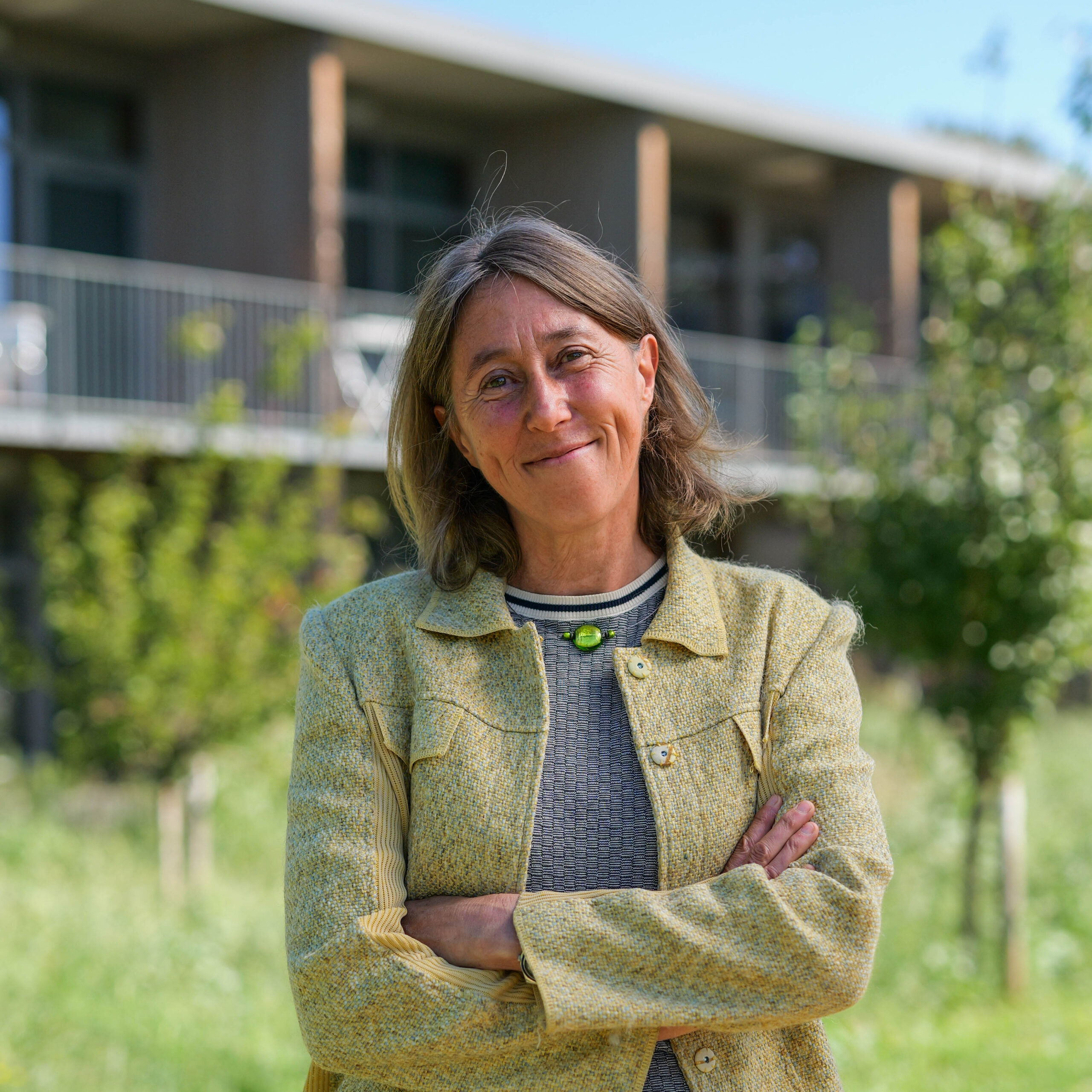
Anne Reynes-Delobel
Research project
Transitive modernities
Project summary
This project, which brings together literature, the visual arts, and art history, builds on the work of an international collective launched in 2021 as part of the European CIVIS alliance. It focuses on developing a methodological tool to reexamine early 20th-century modernist literary and artistic works, emphasizing practices through a socio-historical and material approach aimed at revealing previously unrecognized connections. By placing modernist practices at the point of friction with various contexts that reflect the plurality of modernities, the goal is to view modernism as a cultural phenomenon that transcends the sociocultural and geographical spaces traditionally assigned to it, thereby bringing to light convergences and divergences through which the near and the far illuminate one another.
The hypothesis underlying this project is that literature and the visual arts—understood not only as academic disciplines but also as “everyday” practices—are inherently “transitive” insofar as they allow us to address the uniqueness of each context and, more broadly, the material, social, and political conditions in which art exists. However, situating these cultural objects within a network of often complex and sometimes contradictory relationships requires a meticulous and nuanced analysis of the actors, factors, and effects involved, which renews our focus on the literary and artistic field as a space of power and on the creative act as a production of affects, figures, and symbols. The innovative use of the term “transitivity” — inspired by its grammatical roots— aligns with the project’s central aim of paying closer attention to the multiplicity of actors and the interdependent relationships that come into play in cultural practices.
The project is three-fold.
Working towards a more complex and nuanced approach to certain contemporary phenomena
The first objective is to develop a methodological tool that will serve as a guide for the collective’s future work, as well as a foundation for dialogue among different disciplines, and with cultural practitioners. Based in part on the previous work carried out by the collective, this tool will propose a reassessment of certain concepts (such as ‘exile’ or ‘diaspora’), approaches, and circulations of cultural objects. It will be made available on the Transitive Modernities research blog (via the Hypothèses OpenEdition platform) and accompanied by interviews with researchers released as podcasts.
Broadening the project’s interdisciplinary scope
A second objective is to broaden the project’s interdisciplinary scope beyond literature, the visual arts, and art history. Drawing on research into theoretical texts and meetings with specialists in cultural history, sociology, and the geography of cultural transfers, the goal will be to intensify interdisciplinary exchanges by reflecting on how the humanities can participate more actively in discussions about the international circulation of works and ideas. The concept of transitivity can serve as a basis for these discussions.
Applying this research to participatory research
A third objective involves applying research on transitive modernities to participatory research that will allow for a concrete assessment of the project’s social impact. This research, supported by MSCA-SE Parti-CIVIS funding, brings together part of the “Transitive Modernities” collective around a community-based research project titled “Imagining Community Together,” which aims to trace the history of trans-European and transatlantic cultural circulations and productions generated by an international network of artists and writers associated with the Lacoste School of the Arts in Lacoste (Vaucluse) between 1971 and 1991, with a view to generating new knowledge. The goal is to collectively, inclusively, and creatively preserve the memory of ways of being-together that are in the process of being erased under pressure from various factors — particularly those linked to the rise of individualism and the growing emphasis on the market value of cultural exchanges and circulations — which have inevitably transformed the cultural landscape over the past thirty years.
Biography
Anne Reynes-Delobel is a professor at Aix Marseille Université (amU) and a member of the Laboratoire d’Études et de Recherche sur le Monde Anglophone (LERMA UR853). Her work explores the networked circulation of the literary and artistic transatlantic modernist avant-garde in the interwar period. She is the cofounder and coordinator with Stamatina Dimakopoulou (NKUA) of the research project “Transitive Modernities” (CIVIS/LERMA). She is a founding member of the Banjo Society-Claude McKay (amU) and the current president of the Kay Boyle Society (affiliated to the American Literature Association).
Recent publications include “Un exemple de changement médiologique en acte : le ‘readie’ de Robert Carlton Brown,” Polysèmes [En ligne], 33 | 2026 ; “‘What’s inside a waiter?’ Medium and Contingency in Tender is the Night.” In: F. Scott Fitzgerald. 100 years after Gatsby, Pascale Antolin (dir.), Presses Universitaires de Bordeaux ; She has also coauthored “Passeurs de la littérature américaine en France, 1917-1967”, transatlantica 2, 2022, with B. Tadié, and Investigating Big Magazines. Journal of Modernist Periodical Studies, 11-1, 2020, with C. Cottenet & B. Tadié.