This workshop, organised by Seçil Dağtaş, holder of the 2025-2026 Germaine Tillion: Tomorrow, the Mediterranean – Région Sud/Iméra Chair, explores how contemporary forms of violence, displacement, and destruction transform archival practices into urgent modes of survival, documentation, and political struggle. It examines how archives are produced, contested, and reconstituted in contexts where the very possibility of record-keeping is under threat, and where acts of documentation become inseparable from the conditions of life and recognition.

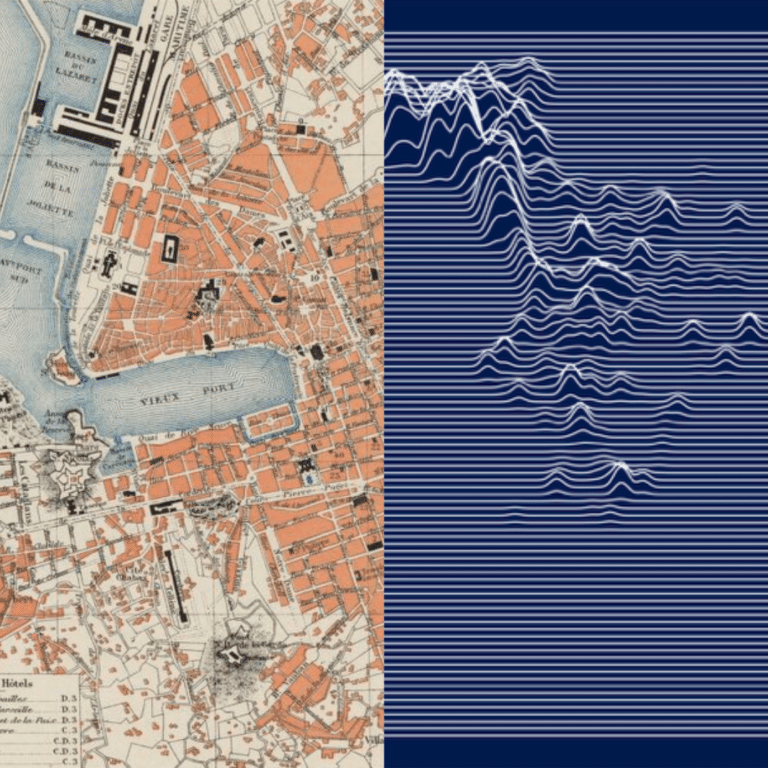
Picture credit: Xiaoqian Shen, Unsplash
Archival destruction
Archives have long been understood as sites of power shaped by the logics of state, empire, and bureaucratic authority, and by what they silence as much as what they preserve. A rich body of scholarship has worked to expose these violent foundations and to recover marginalized presences from within them, whether through counter-memory, critical fabulation, or speculative imagination. Yet much of this work approaches the archive from a position of temporal distance, interrogating what has been suppressed in (or rendered as) the past, or projecting repair onto a future still to come.
This workshop takes a different angle. Rather than beginning from the archive as institution, object, or metaphor to be analyzed at a distance, it follows the people for whom archival stakes are immediate. It proceeds from the observation that, in contexts of sustained violence, displacement, or legal deferral, the urgency to document and the systematic destruction of the means of documentation increasingly unfold together, in the same moment and in direct relation. Under these conditions, archiving is less a matter of preserving what exists than of registering what is being destroyed, claiming what is being denied, and sustaining relations that official records cannot or will not hold.
Documenting a troubled present
This shift foregrounds the conditions under which materials acquire or lose archival weight, and the ways in which evidentiary regimes both structure and exceed what can be recorded, recognized, or made actionable. It also draws attention to the relational work through which archives are produced and sustained, as well as to the ethical and methodological challenges faced by researchers who, often alongside or through their interlocutors, are implicated in documenting a troubled present.
In the workshop, we will explore these dynamics through ethnographic and historical work across contexts as varied as post-earthquake Turkey, asylum proceedings in Germany, activist movements in South Korea, Indigenous land claims and artistic practices in Canada, shipwreck survivor narratives from the southern Indian Ocean coastline, and exile in Jordan. What forms does archiving take when rupture, rather than continuity, structures everyday life?
By bringing these cases into dialogue, the workshop approaches the archive not as a stable object or external lens, but as a set of practices through which people navigate the present, sustain relations across time, and render their worlds legible under conditions of uncertainty.
This workshop is organised by Seçil Dağtaş, Associate Professor in the Department of Anthropology at the University of Waterloo, Canada, and Veronica Ferreri, Global Marie Curie Fellow in the Department of Humanities at Ca’ Foscari University in Venice.
This programme is preliminary. It may change between now and June 9th, 2026.
The sessions are hybrid and can therefore be followed face-to-face as well as remotely.
- 10am-12pm: Session I (closed)
Closed session allowing authors and other interested participants to read and discuss, in small groups, the documents distributed beforehand. - 12pm-1.30pm: lunch
- 1.30pm-2.30pm: Session II (semi-public)
Presentation of the special issue by the two editors, followed by a general discussion on archives and archival practice in troubled times. - 2.30pm-2.40pm: short break
- 2.40pm-3.40pm: Session III (semi-public)
“Interrupted Archives: From Beirut through Jerusalem to Gaza” by Dr. Abdullatif Abu Hashem (amU, IREMAM), in Arabic with English translation. - 3.40pm-4pm: coffee break
- 4-5.30pm: public screening of the documentary Partition by filmmaker and anthropologist Diana Allan (McGill University), followed by a Q&A session.
Sessions I and II will be held in the Maison Neuve conference room.
The screening will take place in the conference room of the Maison des Astronomes.
Practical information
- Date: Tuesday, June 9th, 2026 from 10am to 5.30pm
- Venue: Maison Neuve conference room, Iméra, 2 place Leverrier 13004 Marseille
- All sessions at the event will take place in a hybrid format and will be held primarily in English.
Coming to Iméra
- Pedestrian access: come through the gate of the 2 place Leverrier, 13004 Marseille.
- PRM access: come through the gate of the Allée Jean-Louis Pons, 13004 Marseille.