Rima Majed
Research project
Revolutionary Horizons in the Age of Sectarian Neoliberalism: Lebanon as the Future’s Past
Project summary
Lebanon as a Site of Theory-Making
This project examines the intertwined dynamics of neoliberal capitalism, sectarianism (or identity politics) and revolutionary mobilization through the experience of Lebanon since the October 2019 uprising. At its core is the argument that Lebanon should not be understood as an exceptional or peripheral case, but as a site of theory-making that offers new ways of understanding the contemporary crises of capitalism, democracy, and political imagination. The project proposes to think from Lebanon, treating it as “the future’s past”: a place where political, economic, and social contradictions have intensified in ways that foreshadow broader global trajectories.
The project argues that Lebanon anticipated the global neoliberal turn by several decades. Unlike most countries, it developed without a welfare state, following a trajectory of deregulation and market liberalization long before neoliberalism became globally dominant. At the same time, it institutionalized a consociational political system centered on sectarian representation rather than the developmentalist or authoritarian models that characterized much of the postcolonial Middle East. These intertwined histories of neoliberalism and sectarianism make Lebanon an especially revealing vantage point from which to rethink the global crises of capitalism and democracy.
Since 2019, Lebanon has experienced an extraordinary concentration of catastrophes: one of the world’s worst economic crises since the nineteenth century, institutional collapse, extreme inequality, the massive Beirut port explosion of August 2020, and the Israeli wars on Lebanon since 2024. Rather than treating these events as isolated crises, the project examines them as interconnected expressions of deeper structural contradictions that have generated both revolutionary mobilization and counter-revolution. The Lebanese experience thus becomes a window onto wider transformations shaping the contemporary world.
Sectarian Neoliberalism and Contemporary Revolutions
At the center of the project is the concept of “sectarian neoliberalism”, developed through engagement with debates on racial capitalism, neoliberalism, democracy, feminist political economy, and identity politics. The project argues that neoliberal capitalism depends on mechanisms of social differentiation, including gendered, racialized, ethnicized, regionalized, and sectarian divisions, that become constitutive of economic and political rule. In Lebanon, neoliberalism and sectarianism do not simply coexist but operate as a single governing logic. Identity-based power sharing is therefore understood not primarily as a system of political representation but as a system of discrimination embedded within neoliberal governance.
Building on this framework, the project rethinks the forms and dynamics of twenty-first-century revolutions through the October 2019 uprising. It examines four central questions: Who is the revolutionary subject? Where does revolution unfold geographically, and why? How do revolutionary repertoires evolve under conditions of crisis? What new forms of social and political organization emerge through revolutionary struggle? By addressing these questions, the project revisits the relationship between labor, social reproduction, colonialism, state formation, resistance, and liberation, while theorizing three interconnected crises that characterize the current conjuncture: the crisis of reproductive labor, the crisis of democracy, and the crisis of revolutionary imagination.
The project also adopts a transregional perspective, approaching Lebanon as one node within wider networks of uprisings and political experimentation. It traces how revolutionary slogans, practices, affects, and imaginaries circulate across places such as Beirut, Khartoum, Santiago, and Rojava, while also examining the inequalities and obstacles that shape these circulations. This comparative approach opens a dialogue between sociology, anthropology, history, and political theory, contributing to broader debates on transregional circulation and revolutionary change.
Rethinking Neoliberalism, Democracy, and Revolution
This project insists on theorizing from the periphery rather than about it. Instead of treating Lebanon as a case study through which to illustrate existing concepts, it positions the country as a conceptual laboratory capable of reshaping contemporary debates. In doing so, it challenges several widely accepted assumptions: dominant understandings of revolution rooted in nineteenth- and twentieth-century European experiences; conventional genealogies of neoliberalism; approaches to capitalist crisis that privilege production over social reproduction; the “deeply divided societies” paradigm commonly applied to conflict-ridden societies; and the assumption that revolutions do not occur in so-called “democracies”.
Ultimately, the project seeks to transform Lebanon’s contemporary experience into a broader framework for understanding crisis, democracy, social justice, and revolutionary possibility. By bringing together analyses of neoliberalism, identity politics, labor, and contentious politics, it argues that Lebanon offers not only a local story but also a powerful lens through which to rethink the trajectories of contemporary capitalism and the possibilities of collective transformation. Through this perspective, the project contributes to ongoing debates on revolutionary politics, democratic crisis, and the search for new political horizons in the twenty-first century.
Biography
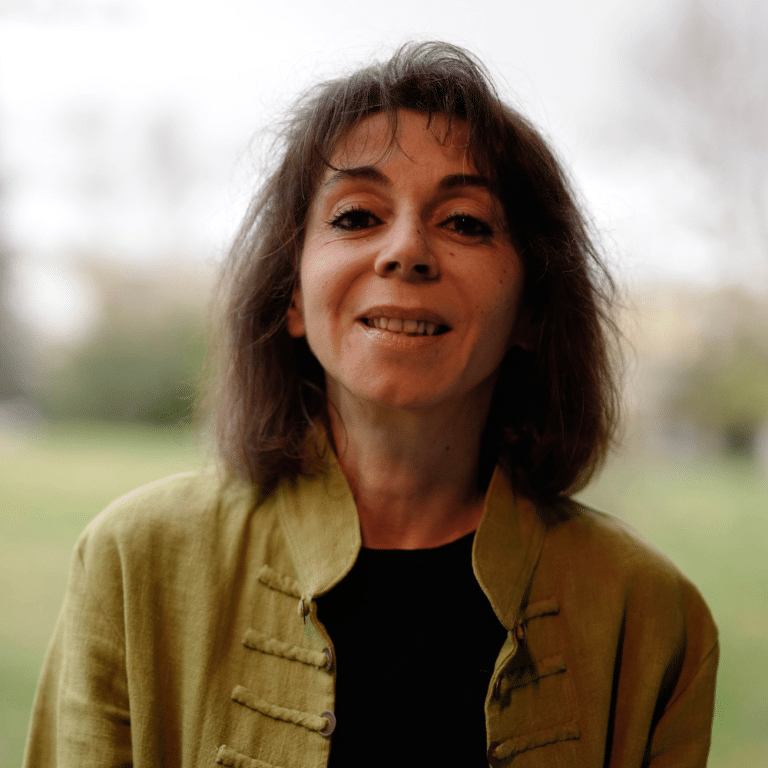
Rima Majed is an Associate Professor of Sociology in the Department of Sociology, Anthropology and Media Studies at the American University of Beirut (AUB). Her research examines social movements, revolutions and uprisings, sectarianism, conflict, and political violence, with a particular focus on the Middle East. She is especially interested in the intersections of neoliberalism, identity politics, and contentious politics.
Dr. Majed was a Visiting Fellow at Princeton University (2018–2019) and a Research Fellow at Harvard University (2022–2023). Her scholarship has been published in leading academic journals and edited volumes, including the American Political Science Review, Social Forces, British Journal of Sociology, the Oxford Handbook of the Sociology of the Middle East, the Middle East Law and Governance Journal, Global Dialogue, Idafat: The Arab Journal of Sociology and the Routledge Handbook on the Politics of the Middle East. Her work has also appeared in national and international public-facing outlets such as openDemocracy, Middle East Eye, CNN, Al Jazeera English, Assafir, Megaphone, and others.
She is the co-editor of The Lebanon Uprising of 2019: Voices from the Revolution (I.B. Tauris, 2022) and the Principal Investigator of the “Critical Approaches to Development Studies in the Middle East and North Africa” project at the American University of Beirut. Dr. Majed is currently completing her first manuscript under contract with Stanford University Press.