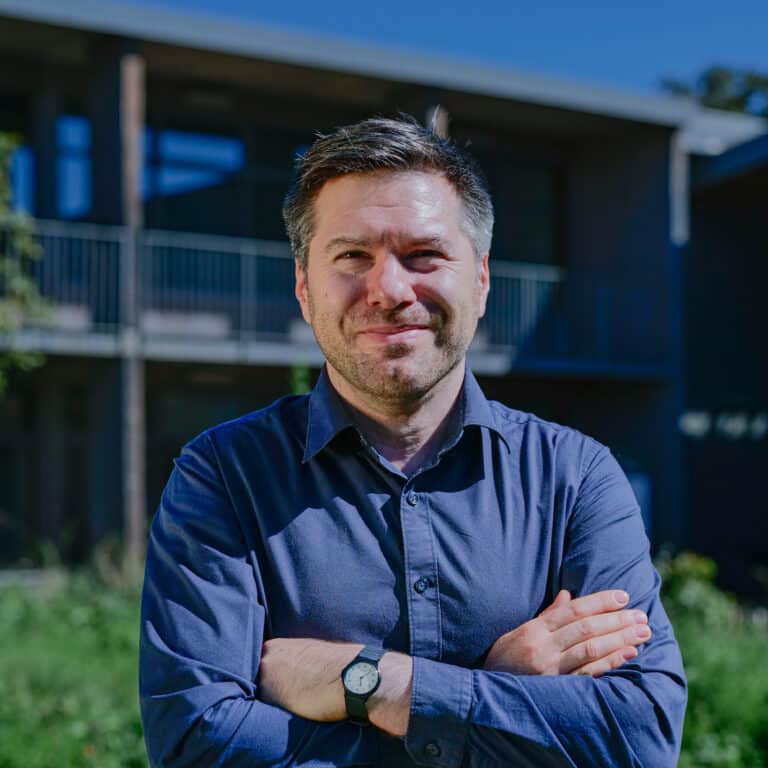
Crédit photo : RGxHB Production
Maryam Palizban
Research project
Artistic Knowledge through Women’s Bodies: Cinematic Memory and Oral Histories in Post-Revolutionary Iran
Project summary
Women’s Bodies as Sites of Memory and Knowledge
Since the 1979 Iranian Revolution, women’s bodies have occupied a central and highly contested position within Iran’s political, social, and cultural landscape. They have become sites upon which ideological conflicts, state regulations, collective desires, and struggles for freedom are inscribed. At the same time, women’s bodies have remained powerful carriers of memory, resistance, and cultural imagination.
This project investigates how artistic knowledge is generated, embodied, and transmitted through women’s bodies in post-revolutionary Iranian cinema. It explores cinema not only as a medium of representation but also as a space where alternative forms of knowledge emerge—forms of knowledge grounded in lived experience, affect, memory, and embodied testimony.
The project is particularly concerned with the ways women filmmakers, actresses, and artists have negotiated systems of censorship and political control while creating new visual and narrative languages. Rather than approaching women solely as subjects represented on screen, the research asks how women themselves become producers and transmitters of knowledge through artistic practice, performance, memory, and storytelling.
The urgency of these questions has become especially visible in the aftermath of the “Woman, Life, Freedom” movement, which has transformed global conversations about gender, resistance, and political agency in Iran. Against this backdrop, the project seeks to understand how cinematic and artistic practices contribute to preserving cultural memory and imagining alternative futures.
Cinema, Oral Histories, and Embodied Testimony
The project combines film analysis with oral history research in order to create a dialogue between cinematic representation and lived experience. At its center are the voices of women who have shaped Iranian cinema across different generations and historical periods.
Through in-depth interviews with actresses, filmmakers, and cultural figures—including pioneers of pre-revolutionary cinema as well as contemporary artists working inside and outside Iran—the project gathers testimonies that illuminate experiences of censorship, migration, artistic creation, political transformation, and survival.
These interviews are not treated merely as historical documents. Instead, they are understood as epistemic acts: moments in which knowledge is produced through memory, narration, and embodied experience. Oral history becomes a method for accessing forms of knowledge that often remain absent from official archives and dominant historiographies.
Alongside these testimonies, the project undertakes a close analysis of selected Iranian films from both pre- and post-revolutionary periods. Particular attention is given to the changing representation of women’s bodies, the politics of visibility and invisibility, the relationship between silence and voice, and the creative strategies developed by filmmakers in response to censorship.
By bringing together oral histories and cinematic analysis, the project proposes a new framework for understanding how cultural memory is created, preserved, and transformed through artistic practices. It also contributes to broader debates in feminist theory, decolonial thought, memory studies, and artistic research.
Artistic Research and the Film Essay
A central component of the project is the creation of a 90-minute film essay that combines oral testimonies, archival materials, film excerpts, and performative elements. Rather than functioning simply as a documentary record, the film essay serves as a form of artistic research and knowledge production in its own right.
The cinematic form allows for a mode of inquiry that extends beyond conventional academic writing. Through montage, rhythm, image, voice, and performance, the film explores the emotional and affective dimensions of memory that often resist purely textual analysis. It seeks to create a space where personal histories intersect with collective experiences and where artistic expression becomes a vehicle for critical reflection.
The film will function as a poetic medium of embodied knowledge and counter-memory. It will explore how women’s bodies carry traces of historical violence, political repression, displacement, and resistance, while simultaneously opening possibilities for imagination, creativity, and transformation.
Alongside the film essay, the project will produce scholarly publications and a multilingual digital archive of oral histories. Together, these outcomes aim to make the collected knowledge accessible to researchers, artists, students, and wider publics.
By bringing together cinema, oral history, feminist theory, and artistic practice, this research seeks to develop new ways of understanding how knowledge is embodied, remembered, and shared. Ultimately, it asks how women’s voices, bodies, and artistic practices can contribute not only to documenting history but also to imagining more just and emancipatory futures.
Biography
Dr. Maryam Palizban is a scholar of Theatre and Cultural Studies, poet, actress, author, and curator based in Berlin. Working across academia and artistic practice, her research explores the intersections of performance, cinema, religion, feminism, and cultural theory, with a particular focus on the body as a site of memory, resistance, and knowledge production.
She received her PhD from Freie Universität Berlin and the Centre for Literary and Cultural Research (ZfL). Her monograph The Performativity of Killing (Kadmos, 2017) examined martyrdom and Shiite theatricality, while her current work focuses on artistic knowledge, women’s corporeality, oral histories, and cinematic memory in post-revolutionary Iran. Alongside her academic work, she has built an international career in cinema and performance, appearing in acclaimed films including Deep Breath (Cannes Film Festival), Fat Shaker (Tiger Award, International Film Festival Rotterdam), Lantouri, and Roya (Berlinale). She is the Co-founder and curator of 3 Days to Liberation, an international platform bringing together artists, filmmakers, scholars, and activists from Iran and the diaspora. Through her artistic and scholarly practice, she seeks to create new dialogues between feminist thought, embodied knowledge, and social transformation.
Maryam Palizban holds a FIAS fellowship for 2026-2027.
The FIAS fellowship Programme is supported by the European Union’s Horizon 2020 research and innovation programme under the Marie Skłodowska-Curie grant agreement n°101217263.